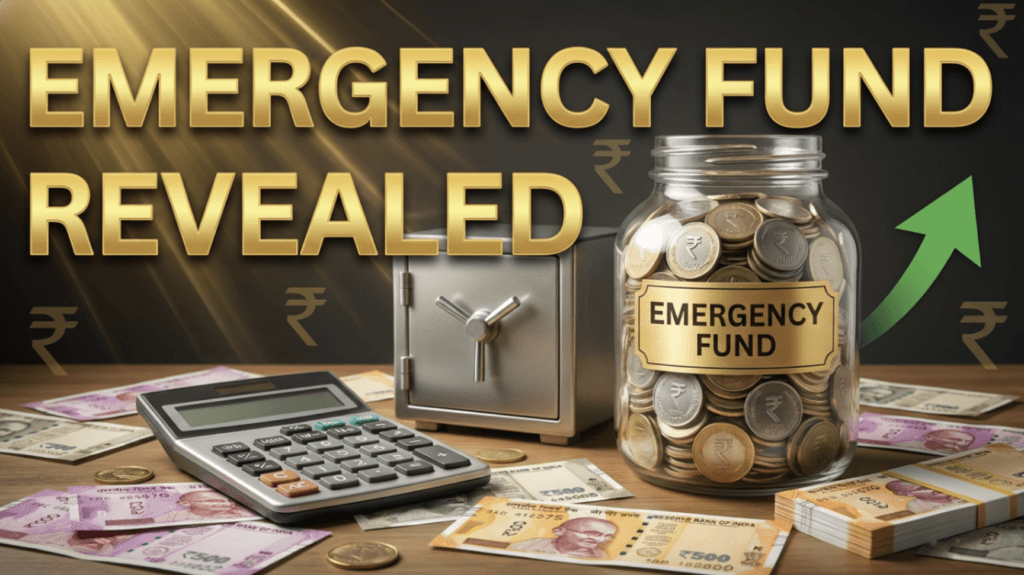
Nowadays, emergency funds have become a very important part of everyone’s daily life. Keeping and maintaining an emergency fund is very important, as life is very uncertain. We never know what will happen tomorrow. One day, everything is fine, and the next day, there is an urgent requirement for money you never knew. Maybe your company announces layoffs, or your car decides that today would be a perfect day for a breakdown, or a family member is admitted to a hospital, things like these usually happen, and we never know. So, for being ready for all of these situations, maintaining an emergency fund becomes necessary.
Let’s make it clear that an emergency fund would not make you rich or would not provide u any sort of returns or would not fund your dreams or life goals. An emergency fund is set up with the aim that when life gets a little messy, a fund or money is there as your financial cushion. The above blog will provide u all the information and knowledge of emergency funds so that no one has to go anywhere else to learn about the same.
What Is an Emergency Fund?
As discussed above, an emergency fund is a sum of money set aside and used only when there is an emergency, when there is an urgent need to spend money, or when there is an urgent requirement for money. These emergency funds are for unavoidable expenses that demand urgent attention and cannot be delayed. This is called an emergency fund.
Think of an emergency fund as your financial safety net. It’s the cushion that lets you handle life’s surprises without the stress of taking out high-interest loans, maxing out credit cards, or being forced to sell your investments when the market is down.
To make sure it actually works when you need it, you have to be clear about what it is not:
- It’s not for goals
- It’s not for “wants”
- It’s not an investment
By keeping a hard line between this fund and the rest of your money, you ensure it stays protected for when you truly need it most.
Why an Emergency Fund Matters in India
In India, life is very unpredictable, and an emergency fund is what that keeps a bad situation turning into a financial disaster.
- Medical bills that end up being much higher than what your insurance covers.
- Job issues, like a sudden layoff or your salary getting delayed.
- Family needs, whether it’s urgent travel for an emergency or supporting aging parents.
- Unexpected repairs for your home or your car that just can’t wait.
Unlike a vacation you can save for over time, these things demand cash right now. Without a backup, you might be forced to take out a high-interest loan or dip into your retirement savings—choices that hurt your future.
Having this fund means you don’t have to panic. It gives you the “breathing room” to focus on the problem at hand rather than worrying about how you’ll pay for it.
Factors Affecting Emergency Fund Requirements
Determining how much you need isn’t one-size-fits-all. It really comes down to your specific life situation. Here are the main factors that shape your number:
- How steady is your paycheck? If you’re salaried and your income is predictable, you might feel okay with a smaller cushion. But if your income fluctuates—like if you’re a freelancer, consultant, or business owner—you’ll want a larger reserve to smooth out those “dry” months.
- Who is counting on you? If you have kids, elderly parents, or other dependents, your financial responsibilities are naturally higher. Your fund needs to be big enough to cover their needs too, not just yours.
- Your non-negotiable bills: Take a look at your fixed monthly costs—things like rent, home loan EMIs, school fees, and insurance. The higher these “must-pay” expenses are, the more you’ll need to have tucked away.
When you look at these factors honestly, you can move away from “guessing” and set a target that actually fits your lifestyle and responsibilities.
Calculating Your Emergency Fund
Building an emergency fund is more about knowing what you must spend than what you actually earn. Here’s a simple, human way to figure out your number:
Step 1: Find your “bare essentials” number
Forget your total salary for a moment. Instead, look only at the bills you absolutely cannot skip if things get tough:
- The roof over your head: Rent or home loan EMIs.
- The basics: Groceries, electricity, water, gas, and internet.
- Getting around: Commuting costs or fuel.
- Health & Family: Insurance premiums, medicines, school fees, and any money you send home to your parents.
The Rule of Thumb: Strip away the “fun stuff” like dining out, Netflix, or weekend shopping. In a real crisis, these are the first things you’d pause anyway.
Step 2: Decide your “safety window”
How many months would it take you to find a new job or get back on your feet? Most people aim for 6 months, but you can choose what feels right for you.
The Math:
- Monthly essentials: ₹35,000
- Your safety window: 6 months
- Your Target = ₹2,10,000
This makes the goal feel real and personal, rather than just a random number someone told you to save.
Where Should You Keep Your Emergency Fund?
Where you store your emergency fund is just as important as how much you save. If you can’t get to it instantly when things go wrong, it’s not really an “emergency” fund.
Think of this money as “Ready Cash” rather than an investment. It needs to follow these simple rules:
- Instant Access: You should be able to withdraw it immediately, even on a holiday or in the middle of the night.
- Safety First: This money shouldn’t be tied to the stock market. You don’t want your safety net to shrink just because the markets had a bad day.
- No Strings Attached: Avoid any accounts with long lock-in periods or heavy penalties for taking your money out early.
- Out of Sight, Out of Mind: Keep it in a separate bank account from your daily spending. If you see it every time you check your balance, you’ll be much more tempted to use it for non-emergencies.
The bottom line: Don’t worry about “maximizing returns” here. The goal of this fund isn’t to make you rich—it’s to keep you safe and ready for anything.
Common Mistakes to Avoid
Even when we have the best intentions, it’s easy to make a few common mistakes that can weaken your safety net. Here is what to watch out for:
- The “Wants vs. Needs” Trap: It’s so tempting to dip into this money for a “once-in-a-lifetime” sale or a last-minute trip. But if it’s a planned purchase or a luxury, it isn’t an emergency. Using it this way leaves you vulnerable when a real crisis hits.
- Forgetting to Refill the Tank: If you actually have to use the money—don’t feel guilty! That’s exactly why you saved it. Just make sure that once the crisis passes, your next goal is to slowly top it back up so you’re ready for the next curveball.
- Making it Too Hard to Reach: Don’t park this cash in accounts that require a lot of paperwork or take days to release funds. If you’re at a hospital or a repair shop, you need that money now, not next week.
- Blurring the Lines: If your emergency fund is sitting in your main bank account, you’ll likely spend it on daily expenses without even realizing it. Keeping it separate makes sure you don’t accidentally “eat” your safety net.
The Golden Rule: Treat this fund like a fire extinguisher. You hope you never have to use it, but you need it to be full and ready to go the moment things get heated.
My Views
Looking back at what I’ve learned—often the hard way—here is my personal take on how to handle an emergency fund:
- Strictly for “Oh No” Moments: This money is for real crises only, not for a weekend shopping spree or a “great deal” you just found. If it isn’t an emergency, don’t touch it.
- Your Life, Your Number: There’s no one-size-fits-all amount. It completely depends on your monthly “must-have” expenses and how secure you feel about your paycheck.
- Safety Over Profits: Forget about chasing high returns or interest rates here. Having the cash accessible and safeis far more important than making a few extra rupees in interest.
- Small Steps Win: You don’t need to fund the whole thing overnight. Building it slowly with regular, small contributions is much better than waiting for a windfall that might never come.
- Give It Its Own Home: Keep this money in a completely separate account. If it’s mixed in with your regular savings, I promise you it’ll vanish right when you need it most.
Disclaimer
Just a quick heads-up: This information is here to help you learn and get started, but it isn’t professional financial or investment advice. Since everyone’s life and finances are different, please take a close look at your own situation and talk to a qualified expert for guidance that is tailored specifically to you.